Things to Know Before Ordering Roll Labels
Label dimensions, wind direction, core diameter, outer diameter, label quantity and equipment compatibility. Pre-order technical checklist, scenarios and comparison.
Read the articleRoll labels are produced by winding die-cut labels on a carrier liner so they are ready to apply. When the winding direction, core diameter and roll diameter are planned correctly, they run smoothly both in manual application and on automatic labelling lines.
Highlights in This Category
A roll label is prepared by shaping the design and winding the labels at set intervals on a carrier liner. This structure means no extra step is needed at the moment of application; the label is transferred directly onto the product surface.
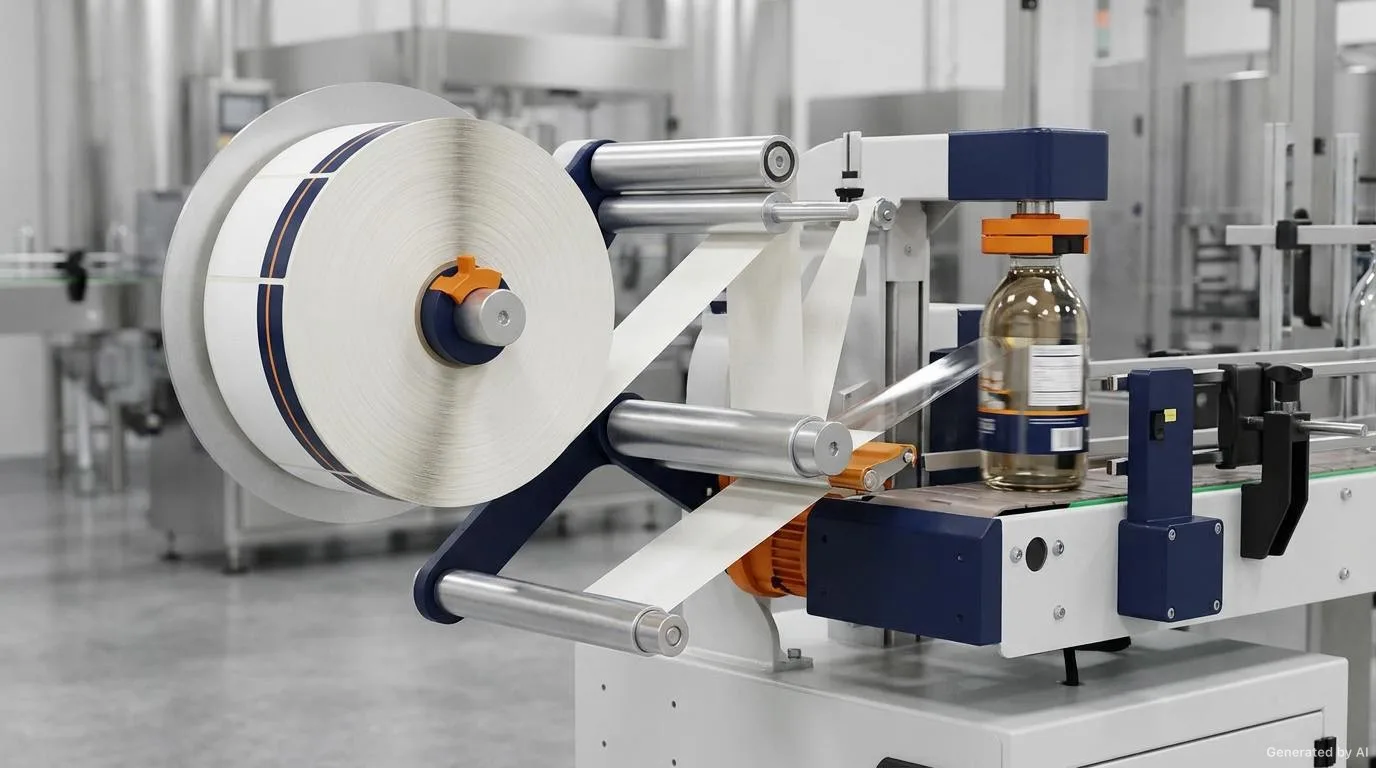
Automatic labelling machines work by detecting the start of each label with sensors. This is why the technical values of the roll must be compatible with the equipment: winding direction, core diameter, roll outer diameter, gap between labels and cut quality. If any one of these values is incompatible, the machine may miss a label, or wrinkling or double feeding may occur.
With manually applied roll labels, user comfort comes to the fore. A roll that is light enough to carry, a liner that peels away easily and clean cut edges directly affect the application speed. Whether several small rolls or a single large roll is more suitable for the same job is determined by the space at the application station and the quantity plan.
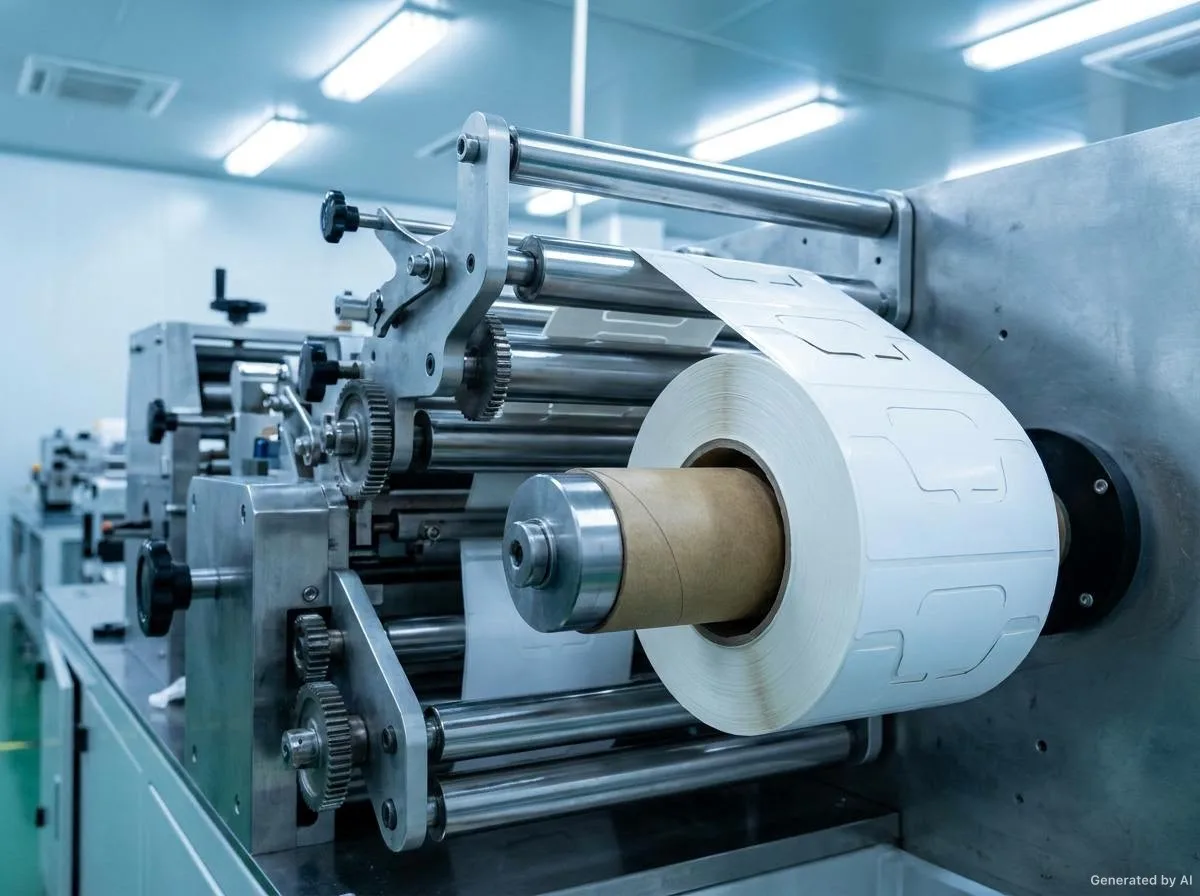
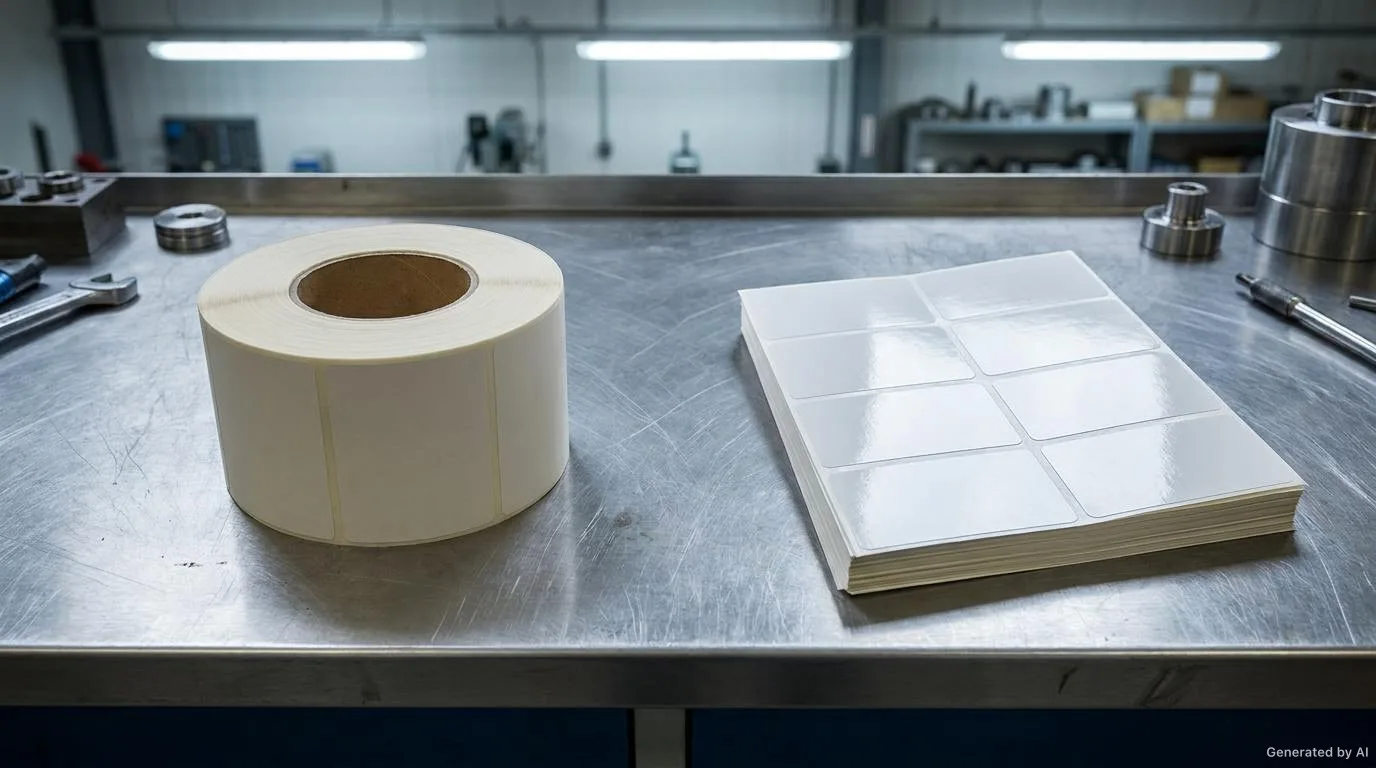
The images on this page are representative; they do not show a specific customer product or order.

The roll format is preferred especially for repeated and serial applications.
The topics below form the basis for determining the right combination in this category. The final choice is clarified together, based on your product surface and usage conditions.
Adhesion may remain weak on low-surface-energy plastics (PP, PE). On these surfaces, the adhesive choice or surface pre-treatment must be evaluated separately.
Whether the labels face outwards or inwards is chosen according to the application direction. A roll planned opposite to the machine's feed direction causes the labels to be applied upside down.
The core diameter is determined by the mandrel of the labelling machine. Common sizes are 40 mm and 76 mm, and a mismatched core causes the roll to wobble.
To make the most of the labelling magazine capacity and reduce roll-change downtime, the roll outer diameter and the number of labels per roll are planned together.
The liner gap between labels is the sensor's read point. When the gap is too narrow or the cut edges are burred, feeding errors occur.
Printing and application decisions take shape according to how the label will be used on the product.
Print approval should not be given before the label's position angle on the product is fixed; direction changes made afterwards affect the entire print run.
The number of colours in the design, the run length and whether it contains variable data are evaluated together to determine the appropriate printing approach.
Fields that change from product to product, such as batch number, expiry date or serial number, must be planned separately before printing.
The cutting tolerance and the gap between labels are set to suit the machine's sensor configuration.
On high-speed lines, an application test with a sample roll before production verifies feeding and adhesion behaviour.
Sharing this information speeds up the quotation and technical evaluation process and reduces the need for changes during production.
It is fine if you do not have complete information; we can start with what you have and complete the rest together.
Request a Quote on WhatsAppRoll Labels
The label's position on the product and the machine's feed direction are evaluated together. The safest route is to share the brand and model of the machine you use, or a sample from an existing roll, so that the feed direction is not left to guesswork.
The core diameter fits onto the mandrel of the labelling machine. A mismatched core causes wobbling, slipping and feeding errors in the roll. The most commonly used sizes are 40 mm and 76 mm, and it is enough to share your machine's mandrel size.
This number varies according to the label size, material thickness and the capacity of the machine's magazine. The aim is to reduce roll-change downtime while keeping the roll balanced and easy to carry.
Yes. For manual application, a smaller roll diameter and a liner that peels away easily are preferred. If you indicate your application frequency, the roll plan is made accordingly.
You can request a sample to see the application behaviour. Sharing the size, surface and machine information with your sample request speeds up the process.
Food Labels
Legible food labels suited to the packaging type and storage conditions.
Cosmetic Labels
Labels suited to bottle and jar surfaces that strengthen brand perception.
Industrial Labels
Labels resistant to temperature, moisture, abrasion and chemical contact.
Textile Labels
Self-adhesive labels used on textile and leather products.
Barcode Labels
Barcode and variable-data labels planned for readability.
Custom-Production Labels
Labels requiring non-standard size, shape and design.
Label dimensions, wind direction, core diameter, outer diameter, label quantity and equipment compatibility. Pre-order technical checklist, scenarios and comparison.
Read the article
We cover label roll preparation for automatic labeling machines: roll and winding direction, core diameter, roll outer diameter, winding tension, gap and die-cut, layout, black mark and sensor marks, liner and application speed, plus a pre-order checklist.
Read the article
Working principles, advantages, limitations and suitable applications of thermal and coated labels. Direct thermal vs thermal transfer difference, comparison table and a decision-making checklist.
Read the articleShare the size, quantity, surface and usage conditions; we will carry out the technical evaluation and get back to you.
The images on this page are representative; they do not show a specific customer product or order.