Labels Resistant to Water, Moisture and Outdoor Conditions
How water, moisture and outdoor resistant labels are designed through synthetic materials, lamination, UV resistance and adhesive selection.
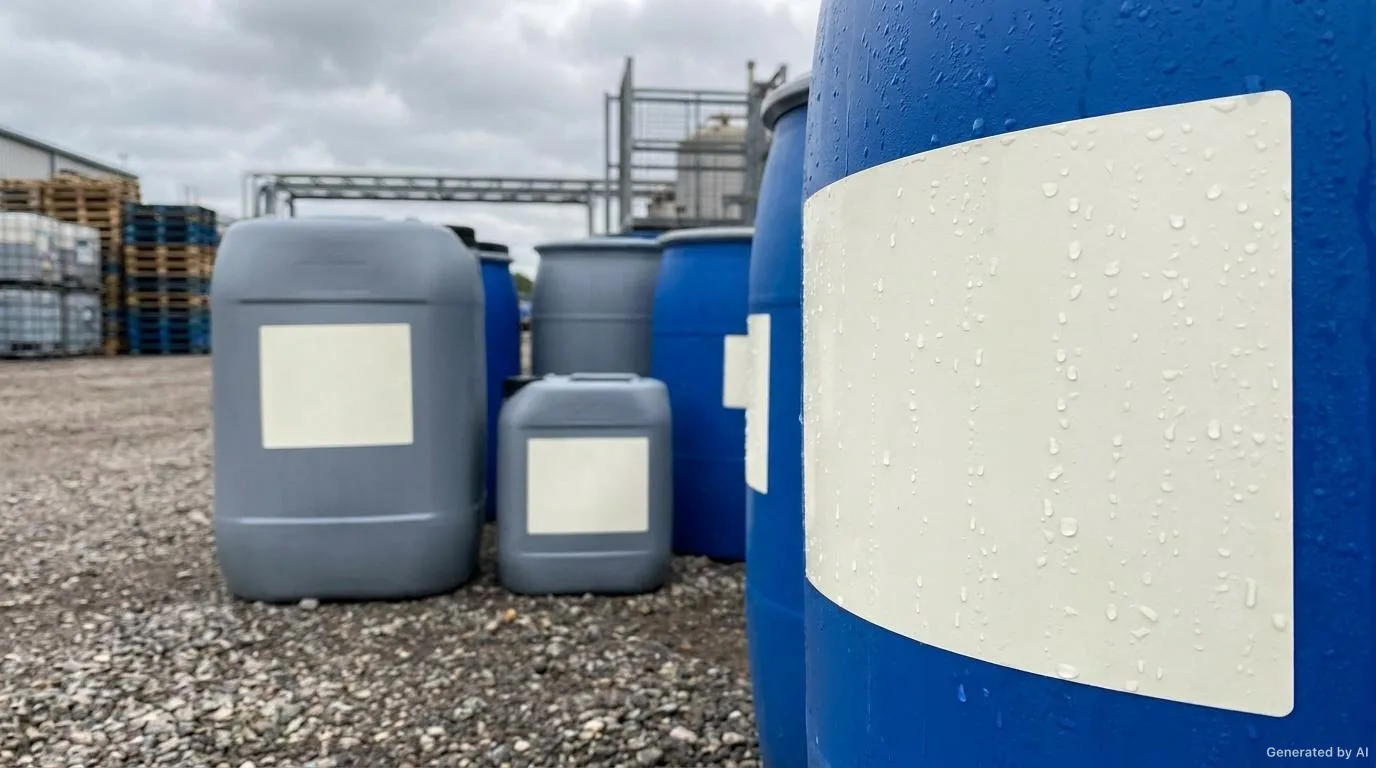
Some labels remain visible only indoors and for a short time, while others are exposed to humid environments, rain, cold or direct sunlight. Under such conditions standard paper labels wear out, swell or fade quickly. In applications requiring durability, material, adhesive and surface protection must be planned together.
In this article we examine in detail how labels resistant to water, moisture and outdoor conditions are designed, under the headings of synthetic materials, lamination, UV resistance and adhesive selection.
Why resistance to water and moisture matters
Paper based labels tend to absorb moisture because of their fibrous structure. This can cause the label to wave, its edges to lift and the printed image to deteriorate. In food, beverage, cold chain and outdoor applications where water and moisture are intense, synthetic materials are often a more reliable option.
Durability is not limited to material selection alone. The behaviour of the adhesive against moisture, temperature and the surface also determines the long term performance of the label. Our article on industrial labels and material selection for harsh conditions, which addresses material selection for industrial use more broadly, is a good complement.
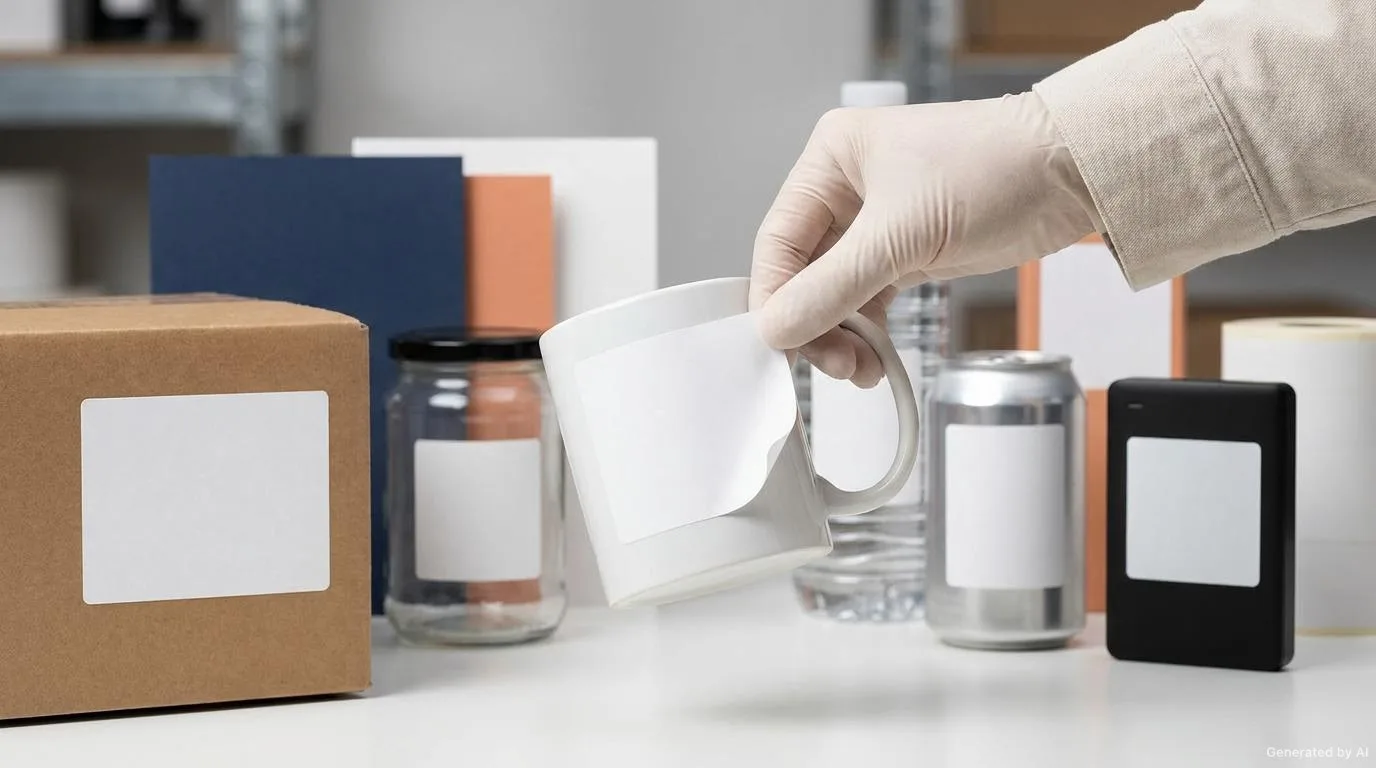
Another factor affecting durability is the surface to which the label is applied. Porous surfaces can absorb the adhesive, while rough surfaces can make full contact difficult. For this reason the same label can give different results on different surfaces. Evaluating the structure and cleanliness of the surface from the start helps prevent adhesion problems that may arise later.
Synthetic materials: PP, PE and PET
Synthetic film materials largely prevent moisture from penetrating the structure and thereby provide resistance to water. The three most commonly used materials are summarised below.
Polypropylene (PP)
PP is frequently preferred for product labels thanks to its glossy surface and good printability. It is resistant to moisture and gives good results on smooth surfaces. When used together with a suitable ribbon and coating, it offers a practical solution for applications exposed to water.
Polyethylene (PE)
PE is a flexible and soft material. It is preferred for squeezable packaging that can be bent and folded. It is resistant to moisture and, because of its low surface energy, requires care in adhesive selection.
Polyester (PET)
PET stands out with its dimensional stability and high tensile strength. It is considered for harsh applications exposed to high temperature and chemicals. Its cost may be higher, but it can be preferred in environments requiring long life.
Lamination and top coating
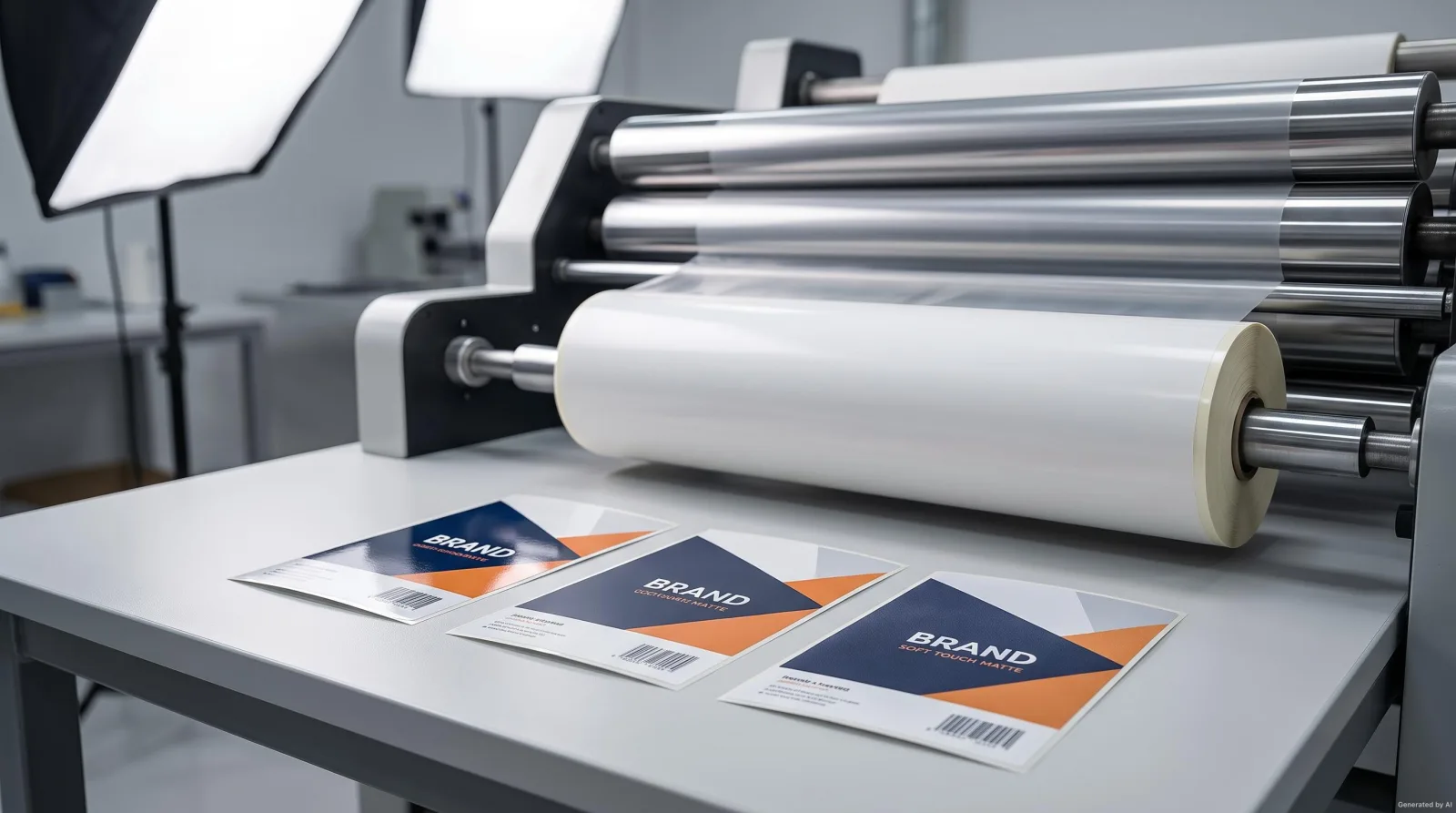
Material selection alone may not be sufficient. Lamination or top coating is applied to protect the printed image and the surface. This protective layer creates an additional barrier against abrasion, moisture, chemical contact and UV exposure.
Gloss lamination offers vivid colours and high contrast, while matte lamination reduces glare and provides a more sophisticated look. Which option is suitable is determined by the environment in which the label will be used and the visual expectation.
UV and temperature resistance
Outdoors or in areas with intense lighting, UV rays can affect the printing ink and the material over time. When a UV resistant material, a suitable ribbon and a protective coating are used together, fading and colour loss can be reduced.
Temperature fluctuations also challenge the label. At high temperatures some adhesives may soften and show slippage, while at low temperatures the bonding strength may decrease. Therefore the temperature range in which the label will be used should be determined from the start and a suitable material and adhesive should be selected accordingly.
Fading and colour permanence outdoors
In outdoor use, the label is expected to stay readable for a long time with colours that do not fade. The main factors affecting fading are UV rays, moisture and temperature cycles. Dark and saturated colours may generally tend to fade faster, so testing under real conditions is useful when choosing colours.
The printing method also matters. When the ribbon and material match is established correctly, resistance to outdoor conditions can increase considerably. Rather than deciding from a single sample, it is advisable to run trials with samples that reflect the real conditions of the application.
Durability requirements by label type
Different applications require different levels of durability. A cold chain product expects the label to keep its shape and readability under refrigerator and freezer conditions, while an outdoor warning label places resistance to sun and rain in the foreground. Therefore, when designing a solution, it is useful to list the conditions the label will meet.
When determining the durability requirement, the service life of the label, the surface it will adhere to, the liquids it will contact and the expected temperature range should be evaluated together. For example, adhesion on a damp and cold surface concerns not only the material but also the behaviour of the adhesive at low temperature. Once these variables are clear, material, coating and adhesive selection can be made much more accurately.
It is also worth remembering that requirements may change over the life cycle of the product. A label may be applied first in a controlled indoor environment and then shipped outdoors, or move from a warm filling line to a cold storage area. Such transitions should be taken into account so that the label performs consistently throughout its life.
Adhesion on cold and damp surfaces
Cold and damp surfaces are one of the most challenging scenarios for labelling. When there is a thin film of moisture on the surface or when the temperature drops, it becomes difficult for the adhesive to wet the surface and initial adhesion may weaken.
In such applications, special adhesives that bond at low temperatures and materials suited to the surface should be considered. In addition, applying sufficient pressure during application helps the adhesive make full contact with the surface. Our article on how to choose a label adhesive, which examines adhesive selection in detail, will be a guide on this subject.
Adhesive selection
Adhesive selection determines both the initial adhesion of the label and its long term behaviour. Acrylic adhesives generally offer a good balance in terms of UV and temperature resistance. Rubber based adhesives provide strong initial adhesion but may be more sensitive to ageing under some conditions.
The suitability of the adhesive should be evaluated according to variables such as surface type, roughness, operating temperature and the dwell time of the label. The table below summarises common surface-adhesive compatibility with a general overview.
| Surface type | What to watch for | Recommended approach |
|---|---|---|
| Smooth plastic (e.g. PP, PE) | Low surface energy | Acrylic or rubber based adhesive with high bonding strength |
| Glass and metal | Surface cleanliness | General purpose permanent acrylic adhesive |
| Cold or damp surface | Bonding at low temperature | Special adhesive suited to low temperature |
| Curved surface | Need for flexibility | Flexible film material and compatible adhesive |
| Oily surface | Film that reduces adhesion | Pre-cleaning and suitable adhesive selection |
Storage conditions
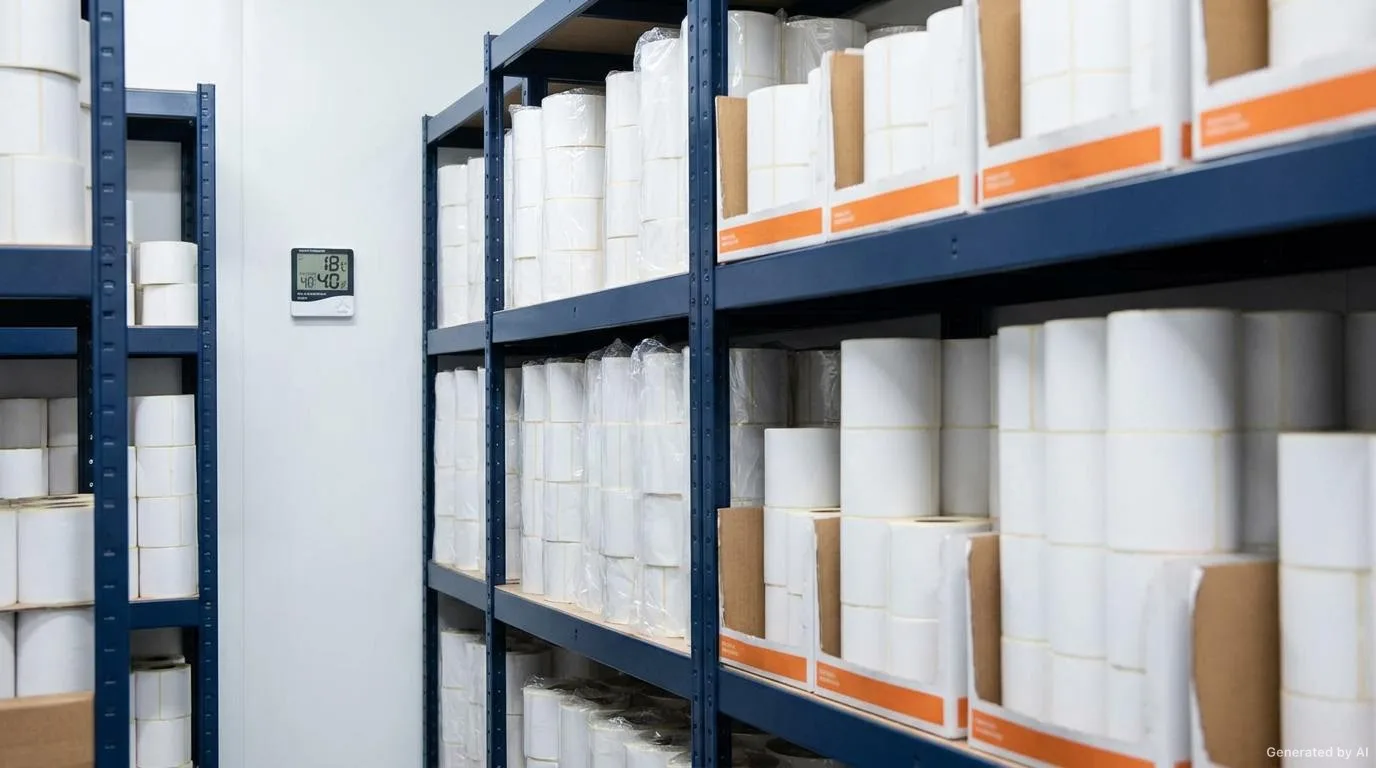
If labels are not stored under the right conditions before use, they may not perform as expected. Rolls should be kept away from direct sunlight, high humidity and extreme temperatures. Storing them in their original packaging in a clean and cool environment helps preserve the adhesive and material properties.
In stock management, a first in first out approach helps prevent materials from losing their properties by waiting too long. Re-sealing opened rolls for protection also reduces the effect of dust and moisture on the surface.
Common mistakes
A large proportion of durability problems come from focusing on a single component and overlooking the whole process. The mistakes below are frequently seen and most can be prevented with small checks made before application.
- Focusing only on the material and ignoring adhesive compatibility.
- Skipping the protective coating in outdoor applications.
- Using standard adhesive on cold or damp surfaces.
- Leaving rolls in a humid and hot environment during storage.
- Neglecting application pressure and surface cleanliness.
- Placing a high volume order without a sample test.
A practical checklist
- Determine the moisture, water and temperature conditions the label will meet.
- Choose a suitable material such as PP, PE or PET according to the duration of the application.
- If necessary, protect the surface with lamination or top coating.
- Consider UV resistant material and a suitable ribbon for outdoor use.
- Select an adhesive suited to the surface type and temperature.
- Clean the surface before application and apply sufficient pressure.
- Run a sample test under real conditions.
Conclusion
Labels resistant to water, moisture and outdoor conditions emerge from planning the right material, a suitable adhesive and, where necessary, surface protection together. A single perfect component is not enough for the label as a whole to show the expected performance. By sharing your usage conditions and the requirements of your application, you can request a technical assessment and sample support for our label solutions suited to your process.
Frequently Asked Questions
Which materials are suitable for water and moisture resistant labels?
Synthetic film materials such as polypropylene (PP), polyethylene (PE) and polyester (PET) are considerably more resistant to water and moisture than paper. The choice is made according to the duration of the application and the environmental conditions.
What is the purpose of lamination and top coating?
Lamination or top coating creates an additional barrier that protects the printed image and the label surface against abrasion, moisture, chemical contact and UV exposure.
Why may labels fall off on cold and damp surfaces?
At low temperatures or on damp surfaces many adhesives cannot achieve sufficient wetting. In such cases special adhesives that bond at low temperatures should be considered.
Why do labels used outdoors fade?
UV rays and temperature fluctuations can affect ink and material over time. Choosing a UV resistant material, a suitable ribbon and a protective coating helps reduce fading.
How should labels be protected during storage?
Label rolls should be stored in their original packaging in a clean and cool environment, away from direct sunlight, high humidity and extreme temperatures.
Want to Determine the Right Label for Your Product?
Share your usage area and needs with us; let's evaluate suitable options together.