Matte vs Gloss Labels: Which One Is Right?
We compare matte and gloss surface finishes in terms of light reflection, fingerprint and smudge visibility, premium perception, barcode readability, print vibrancy, lamination and cost, and explain which one suits which product.
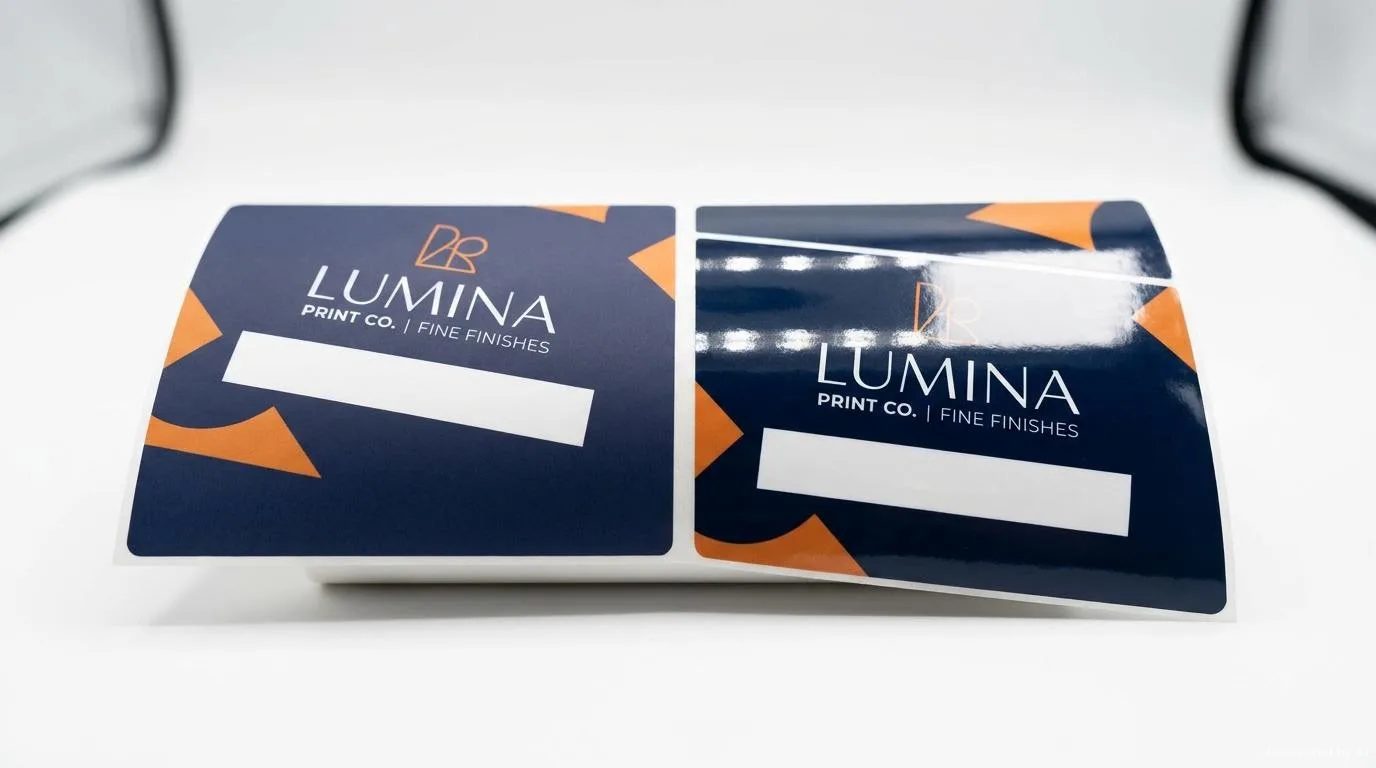
Matte and gloss are the two fundamental surface finishes that define how a label looks and feels in use. Two labels made from the same material, with the same design and the same print quality, can give a completely different impression on the shelf when only the finish changes. There is no single answer to “which is better?” The right choice depends on the product category, storage and use conditions, the message the brand wants to send and the need for readability.
In this article we compare matte and gloss finishes directly: light reflection and glare, fingerprint and smudge visibility, premium/boutique perception, barcode and small-text readability, print vibrancy, durability and the relationship with lamination, sector-based preferences and cost. Our goal is to lay out the strengths and weaknesses of each finish without exaggeration and to make your decision easier.
What is a matte or gloss surface finish?
The surface finish describes how the outermost layer of the label material (paper or film) behaves. A matte surface absorbs and scatters light, so no sharp reflection forms on the surface and the look feels softer and more textured. A gloss surface reflects light more directionally, which makes colours more vivid and the surface look sharper and more glass-like.
This finish can come from the material itself or from a lamination (protective film) or varnish applied afterwards. For example, a matte lamination applied over a gloss material will matte the surface; conversely, a gloss lamination over a matte surface will make it shine. This flexibility makes the finish an independent decision at the design and production stage.
It is important to know that matte and gloss are not a quality ranking but a character choice. Both give a professional, high-quality result when used correctly; the difference lies in the intended effect and the use conditions.
Light reflection and glare
The most obvious feature of a gloss surface is that it reflects light strongly. From the right angle this creates an impressive vibrancy and depth; but under intense store lighting or from certain angles, glare can form over the text. Glare can temporarily make small text and light-coloured areas harder to read.
Because a matte surface scatters light, it produces almost no glare and offers a homogeneous look from every angle. This is a big advantage in stores with strong shelf lighting, in shop windows and in photographs: the label stays equally legible from every angle. On the other hand, a matte surface can make colours look slightly flatter than gloss.
As a practical rule, in environments where lighting cannot be controlled (supermarket shelves, open shelving, shop windows), a matte surface is the safer choice; in boutiques or premium displays with controlled spot lighting, a gloss surface can be more striking.
Fingerprint, smudge and scratch visibility
Gloss surfaces are at a disadvantage when it comes to fingerprint and smudge visibility. Oily fingerprints and touched areas stand out more on a gloss background, because the surface reflects light and even the smallest mark catches the eye. On products that are handled often, this can make the packaging look used quickly.
A matte surface hides fingerprints and light smudges better. Scattered light reduces the perception of small imperfections, so matte finishes give a cleaner look on heavily handled products. However, even a matte surface can develop shiny spots from finger oil over time; they are just less noticeable than on gloss.
Scratches depend on the applied surface and the material. Some matte laminations show surface scratches less, while some gloss surfaces can make fine scratches more visible. For this reason, testing with a sample is recommended, especially in demanding conditions.
Premium and boutique perception
A gloss surface is often associated with a premium, luxury and modern perception. The sharp, light-reflecting surface makes colours look bright and saturated, which creates an upscale impression in some categories. This is reinforced especially when dark saturated colours, metallic effects and photo prints look more striking on gloss.
A matte surface represents a different boutique aesthetic. Its soft, textured and reflection-free look gives a calm, sophisticated and handmade or natural feeling. In recent years many niche brands have chosen matte finishes to convey a simple and refined stance. A matte surface matches well with brands that communicate “less but better” and naturalness.
What matters here is that perception changes with the sector and the target audience. The same gloss surface can look modern and innovative on a tech product but artificial on an olive oil bottle; a matte surface can look elegant on a cosmetic pack but plain on a detergent pack.
Barcode and small-text readability
Readability is often overlooked but is a critical factor. The reflection of a gloss surface can cause problems for barcode scanners and small-print information areas; glare can make a barcode hard to read with a laser or camera. For this reason, matte is generally the safer option where barcodes are used heavily and lighting cannot be controlled.
A matte surface is also advantageous for small text (ingredients, warnings, address, technical information). A reflection-free surface makes the edges of thin lines and small letters appear sharper. On gloss, these details can temporarily disappear when not viewed from the right angle.
However, coding and labelling systems often use different reading technologies, so the exact behaviour depends on the reader and the surface. For a critical application, the best approach is to test a sample with the actual reader device.
Print and photo vibrancy
Gloss stands out for colour and visual vibrancy. The reflection makes printed colours appear more saturated and deep; labels with photos, gradient designs and metallic effects look more dramatic on gloss. Gloss also gives striking results in controlled light for e-commerce and display photography.
A matte surface shows colours in a softer, matte tone. In photos this may be perceived as some loss of vibrancy; yet this flatness is often a desired aesthetic. Especially for pastel tones, minimal designs and brands that want a textured look, matte can be the right choice.
Print quality can be high with either finish; the difference is in the perception created by how light interacts with the surface. Evaluating your design in both finishes prevents surprises. For more on this, see our article on colour and readability in label printing.
Durability and the relationship with lamination
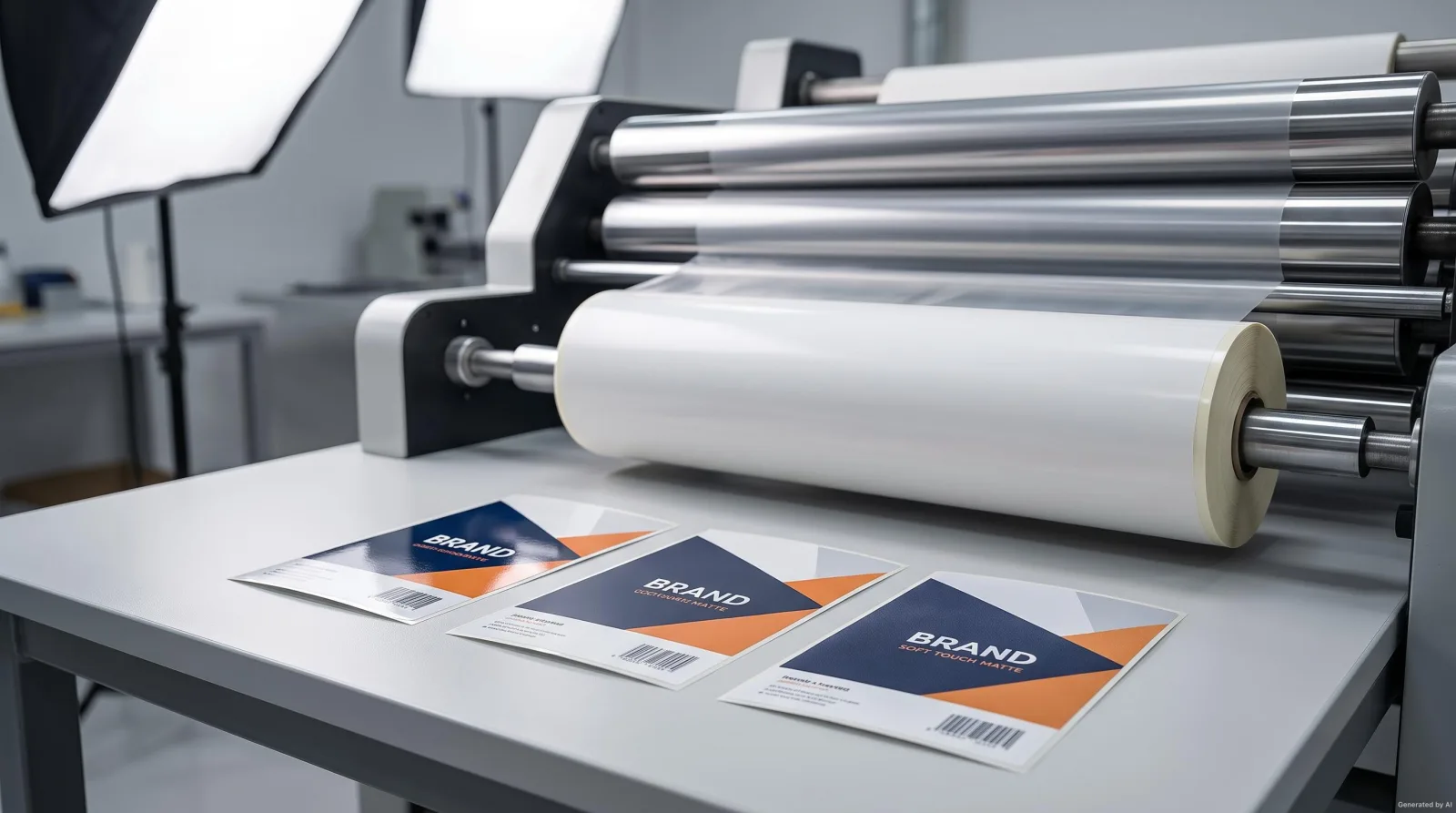
Matte and gloss finishes are usually created by lamination or varnish. Lamination applies a thin protective film to the label surface; this layer protects the surface against scratches, moisture and abrasion and also determines the finish. Matte lamination cuts reflection, while gloss lamination adds depth and shine.
In terms of durability, the real factor is the presence and type of lamination; whether it is matte or gloss does not by itself determine durability. A correct lamination can protect both matte and gloss surfaces against external factors. In demanding conditions (moisture, abrasion, chemical contact), choosing the right protective layer becomes more critical than the finish.
On some surfaces a gloss lamination can make fine scratches more visible, while a matte lamination may hide such surface damage a little better. So if high durability is expected, the right adhesive and the right lamination should be assessed together.
Sector preferences
Below we summarise typical tendencies by sector. These are not strict rules but common preferences; every product should be assessed in its own conditions.
Cosmetics and personal care: Premium perception is key. In the luxury segment gloss lamination is common, because a shiny surface reinforces an upscale feel. Brands on a minimal, natural or clean beauty line choose matte to achieve a simple elegance.
Food: It depends on the product. Gloss is common for processed foods that need a clear look and vivid colours; matte is an advantage where barcodes and nutrition facts must be read clearly. For humid and refrigerated products, the lamination choice is decisive.
Wine and beverages: In boutique and craft production, matte, textured paper and matte lamination give a prestigious look. For large-scale and vivid labels, gloss can produce more vibrant results. The label's resistance to moisture and refrigeration should also be assessed.
Logistics and warehousing: Here the priority is fast and reliable reading. Because barcodes and QR codes must be read from many angles without problems, matte is generally the safer choice. Heavy handling also makes fingerprint and abrasion resistance important. See our article on barcode labels in logistics and warehouse processes.
Matte vs gloss comparison table
The table below summarises the typical tendencies of the two finishes. The assessment is a general guide and may vary with material, lamination and use conditions.
| Criterion | Matte surface | Gloss surface |
|---|---|---|
| Light reflection / glare | Low, reflection-free | High, prominent |
| Fingerprint visibility | Shows little | Shows clearly |
| Smudge / oil marks | Less noticeable | More noticeable |
| Colour vibrancy | Soft, matte tone | Vivid, saturated |
| Premium perception | Boutique, elegant, natural | Luxury, modern, sharp |
| Barcode / small-text readability | High | Lower, depending on glare |
| Perceived scratch resistance | Hides surface marks a little | May highlight fine scratches |
| Photo / gradient appearance | Flatter | More dramatic |
| Suitable use | Barcoded, handled, readability-critical | Display, premium presentation, vivid visuals |
Which one when?
- Choose matte: when barcode and small-text readability is critical.
- Choose matte: when the product is heavily handled and fingerprints or smudges should not show.
- Choose matte: when a boutique, natural, minimal or plain brand identity is targeted.
- Choose matte: in shelf and window conditions where lighting cannot be controlled.
- Choose gloss: when colour vibrancy and visual depth are the priority.
- Choose gloss: when a premium or luxury segment perception is targeted.
- Choose gloss: with photo, gradient or metallic-effect designs.
- Choose gloss: for products displayed under controlled lighting.
Selection checklist
- Where and under what light will the label be seen?
- Is there a barcode, QR code or small text; how is readability affected?
- Is the product handled by hand, exposed to cleaning or oil?
- What is the target brand perception: premium/gloss or boutique/matte?
- Does the design contain many photos or gradients?
- Will the surface be exposed to scratches, moisture or abrasion?
- Is lamination needed, and will it be matte or gloss?
- Are the adhesive and surface compatible with the chosen finish?
- Have both readability and appearance been tested on a sample?
- Has the balance between cost and run length been considered?
A realistic use case
Consider a small-scale olive oil producer. The product is sold both in supermarkets and in its own boutique. The first label prepared for the boutique had a gloss lamination: under spot lighting it looked very striking. But on supermarket shelves, under strong multi-directional light, part of the label produced glare and the small technical information on the pack was hard to read. Fingerprints also became visible on bottles that were handled often during sale.
The producer therefore tested two labels: gloss for the boutique and premium gift boxes, matte for the supermarket shelves. This kept the striking look in the window while ensuring readability and a clean look on the shelf. This example shows that a single finish does not suit every condition; the decision should be based on where the product is sold.
Cost and overall impact
The cost difference between matte and gloss is usually small; the real cost differences come from the chosen lamination type, material and run length. Some special matte laminations (for example textured or soft-touch surfaces) can be more expensive than standard options. But in general the finish choice has a moderate effect on unit cost.
The real overall impact is on perception and sales. The right finish directly affects the product's shelf appearance, readability and the brand's message. The wrong finish can lead to an unreadable barcode, a surface that smudges easily or a look that does not match the brand. So the finish decision should be considered together with the total user experience, not only cost. For cost, our article on factors affecting label cost offers more detail.
Conclusion and practical recommendations
There is no best finish between matte and gloss; there is the one most suitable for your product. When deciding, seek answers to three questions: where will the label be seen, what readability is needed and what feeling does the brand want to convey? Once you answer these clearly, the right finish usually emerges on its own.
As a general framework: if readability and durability are the priority, matte; if visual vibrancy and premium presentation are the priority, gloss is a good start. But you can also use both: for example, the same brand can choose different finishes across product groups. At the design stage, our articles on 10 common mistakes in label design, coated paper versus film labels and cosmetic label design and premium brand perception can guide you.
Let us define the right finish for your product together
Every product has a different shelf appearance, readability need and brand message. Choosing the right surface finish ensures both a strong first impression and staying clean and legible in daily use. Share your product type and use conditions, and we will recommend whether matte or gloss suits you and the most suitable lamination option. You can browse our range on the products page, or reach us through the request a quote page for a quick assessment.
Frequently Asked Questions
What is the main difference between a matte and a gloss label?
The main difference is how the surface interacts with light. A matte surface scatters light, reduces reflection and gives a legible, plain look; a gloss surface reflects light, making colours look more vivid and sharp. Both give a quality result; the difference lies in the intended effect and the use conditions.
Which is more suitable for barcodes and small text?
Matte is usually more suitable, because it creates no glare and makes barcodes and small text easier to read from any angle. On a gloss surface, glare under strong light can make reading harder. For a critical application, testing a sample with the actual reader device is recommended.
For a premium look, should matte or gloss be chosen?
Both can create a premium perception but in different ways. A gloss surface gives a luxurious, modern and vivid impression; a matte surface conveys a boutique, elegant and natural character. The right choice depends on the brand identity and segment you are targeting.
On which finish do fingerprints and smudges show more?
Fingerprints and oily smudges show more on a gloss surface, because a reflective surface brings out even the smallest mark. A matte surface hides such marks better, so matte usually looks cleaner on heavily handled products.
Is the cost difference between matte and gloss large?
The finish choice usually has a moderate effect on unit cost. The real cost differences come from the lamination type, material and run length. Some special matte laminations can be more expensive than standard options, so the decision should be based on overall impact, not price alone.
Want to Determine the Right Label for Your Product?
Share your usage area and needs with us; let's evaluate suitable options together.