Textile and Product Identification Labels
Woven and ribbon labels, fabric labels, washing durability, care and composition information, size and identity labels, sewing placement and traceability.
Textile and product identification labels are the silent guides that tell what a product is, what material it is made from and how it should be washed and cared for. A well designed label both guides the consumer correctly and shows the brand product responsibility in a professional way. In this guide we cover woven and ribbon labels, fabric labels, durability, care information, size and identity labels, sewing placement and traceability.
Our aim is to make clear which criteria are decisive when choosing textile and product identification labels and to help you avoid common mistakes. The label stays with the product throughout its service life, so it must carry both durable and accurate information.
What textile labels are and where they are used
Textile labels are used on garments, home textiles, bags, footwear and accessories. These labels carry the brand, size, material composition, care instructions and sometimes production information of the product. Product identification labels are identity and traceability labels used in a broader scope, including products outside textiles.
These two label groups are often assessed together because both remain in contact with the product for a long time and have similar durability expectations. On washable products, the label not fading, detaching or becoming unreadable is the basic requirement.
Woven and ribbon labels
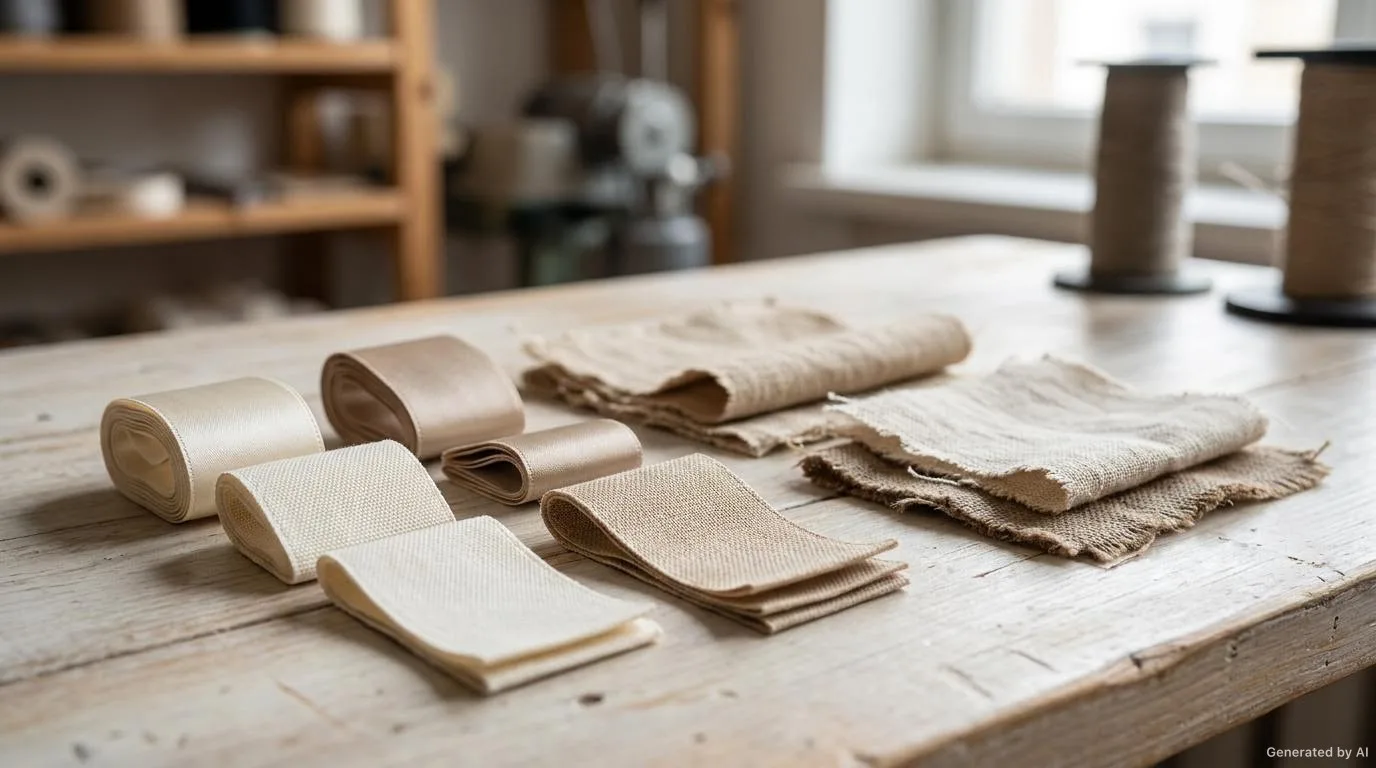
On woven labels the text and pattern are created directly with threads. This method gives the label a tactile depth and provides high resistance to washing. They are frequently preferred for brand labels, especially on premium products.
Advantages of woven labels
Woven labels are resistant to fading and keep their readability throughout a long service life. Brand perception can be strengthened with embossed or silky textures. They become economical at high volumes and support the quality impression of the product.
Advantages of printed ribbon labels
On printed ribbon labels the information is printed on the surface. Production is usually faster and more economical, offering flexibility in fine detail and multi colour designs. They provide a quick solution for short and medium volume jobs; however, print quality and washing durability depend on the material choice.
Fabric labels and material selection
Thanks to their soft structure, fabric labels provide comfort on products that touch the skin. Polyester, satin, cotton and blended fabrics are the most commonly used options. Material selection should be made according to the washing conditions of the product and the desired feel.
On neck labels that touch the skin directly, soft materials with well finished edges are preferred to reduce the risk of irritation. The printing ink is also expected to be skin compatible and permanent. For this reason, fabric label selection is not only a visual but also a comfort oriented decision.
Washing and usage durability
The washing durability of a label is the combined result of the material used, the print type, the ink and the sewing method. On frequently washed products, fading, shrinking or opening of the label edges are undesirable situations. To reduce these effects, a suitable material and strong sewing should be considered together.
Industrial washing conditions
Products such as hotel, hospital or workwear items may go through industrial washing and high temperature tumble drying processes. Special material and print options developed for these conditions are available. However, testing each product group under real conditions is the most reliable approach.
Displaying care and composition information
Care instructions are usually given with symbols and short text explanations. Keeping the symbols clear and consistent helps users in different markets interpret the instructions correctly. The material composition is usually stated as percentage ratios.
Accurate and complete information is important for the product to perform as expected. The text and symbols on the label are expected to remain readable along with the product for a long time. Therefore, on labels that contain care information, durability becomes a priority criterion.
Product identity and size labels
A size label states the measurement of the product and is usually placed at the neck or waist area. A product identity label carries the product code, batch information, production data and, where required, traceability information. The two have different functions and are often used in separate positions.
Product identity labels make it easier to track a product from production to shipment. Because readability is critical in warehouse and logistics processes, print clarity and material durability should be assessed separately on these labels.
Sewing and placement
The way a label is sewn directly affects both comfort and durability. A label whose edges are not well finished can open easily after washing and cause discomfort. Therefore the stitch type and edge finish are as important as the material selection.
Placement decisions
Different positions such as the neck label, side label and inner label take on different functions. The placement should not hinder the use of the product and should provide easy access to the care information. The use of multi layer labels helps present several information groups in an orderly way.
Traceability with barcodes and QR codes
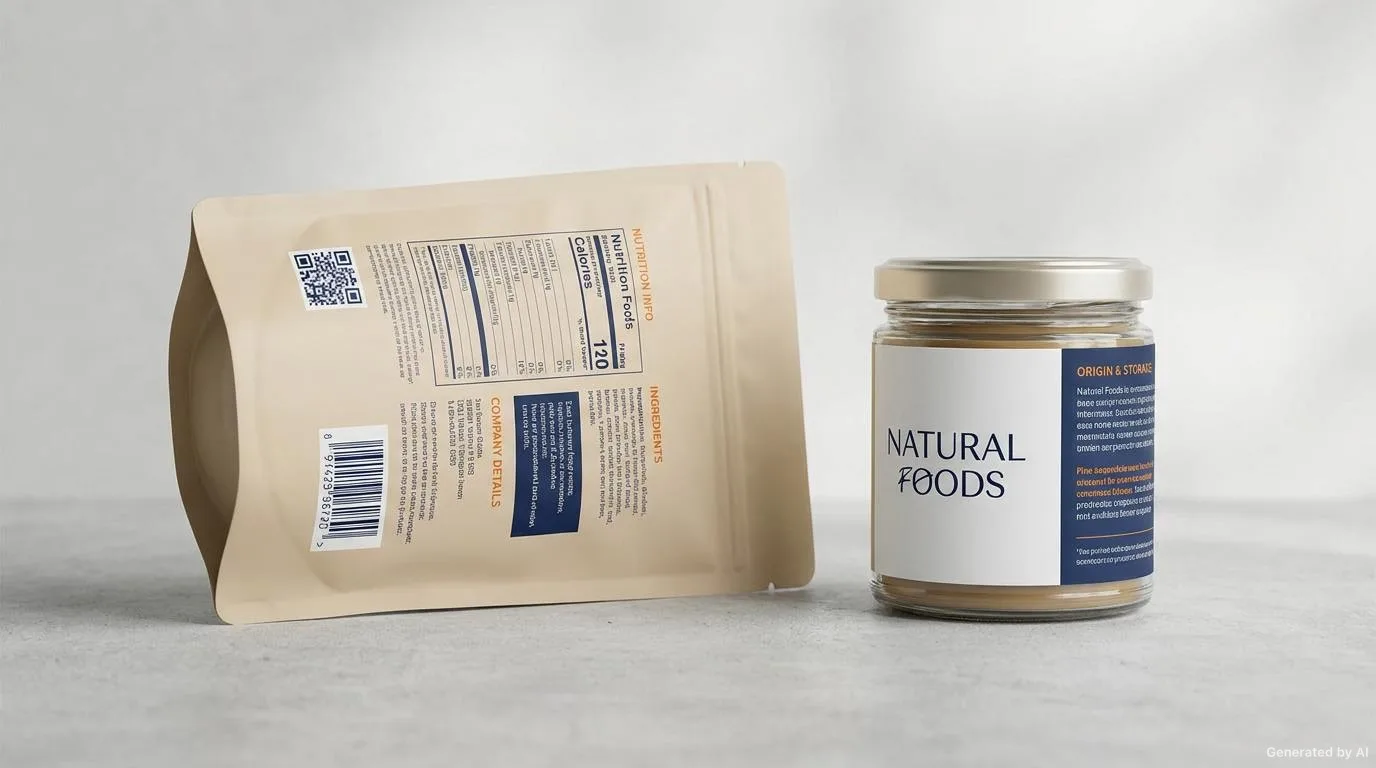
Barcodes and QR codes support the traceability and stock management of a product. Through a QR code, access can be provided to care information, digital content or the product story. Therefore readability and print quality become a priority on traceability labels.
On flexible and washable products such as textiles, barcode printing can be challenging. In this case, durable material, correct contrast and suitable printing technology should be assessed together. Performing a reading test on a sample is useful for predicting field performance.
The data structure used on traceability labels is also important. Coding the product code, batch number and size information consistently reduces confusion in stock and shipment processes. When the coding standard is defined from the start, it becomes easier to achieve compatibility between different suppliers and systems.
Sampling and verification process
The most reliable way to determine the right label is to try the chosen material and print under real usage conditions. Factors such as washing, friction and moisture can change the performance of a label over time. Therefore, carrying out controlled tests on a sample before production makes potential problems visible at an early stage. In this way both the material and the print choice can be confirmed more safely.
During the verification process, the fading, shrinking, edge opening and readability behaviour of the label should be assessed separately. In addition, if a barcode or QR code is used, it should be checked whether readability is preserved after washing. These steps both reduce return risk and support final product quality.
Sample tests also offer an opportunity to compare different sewing and placement options. Details such as edge finishing, stitch frequency and label position directly affect the user experience of the product. A small scale pilot study can reveal in advance many problems that might occur in series production.
Woven and ribbon label comparison table
| Criterion | Woven label | Printed ribbon label |
|---|---|---|
| Production method | Woven with threads | Printed on the surface |
| Feel | Deep, textured | Flatter |
| Washing durability | High | Depends on material |
| Colour and detail | Durable, limited transition | Flexible in fine detail |
| Cost | Advantageous at high volume | Economical at low volume |
| Prominent use | Brand and quality perception | Care and information label |
Common mistakes and checklist
- Was the material not selected according to care and washing conditions?
- Was the print not done with washing resistant ink?
- Was the edge finishing left weak?
- Were size and identity labels confused?
- Are the care symbols inconsistent or incomplete?
- Was barcode contrast and readability not tested?
- Does the label position affect skin comfort negatively?
- Was the sample not tried under real usage conditions?
Label approach by product group
The label decision progresses more soundly if it is made during the design stage of the product. When the fabric type, the sewing plan and the label position are defined together, changes to be made later are reduced. This approach supports both production efficiency and the final quality of the product.
On everyday garments, soft and skin friendly neck labels come to the fore. To avoid causing discomfort after washing, the edges of these labels must be well finished. Care and composition information is usually gathered on a separate inner label, and its readability should be preserved over time.
On workwear and technical textile products, durability becomes more critical. These products may be washed more frequently and at higher temperatures. Therefore, compatibility with industrial conditions is a priority item when selecting the material and print.
On home textiles and accessories, visual harmony and durability are considered together. While colour and texture selection supports the style of the product, the label is expected to keep its form after washing. Although priorities change by product group, the basic rule is the same: the right material, the right print and the right sewing working together.
Although priorities change by product group, a common approach is possible. First it is clarified how the product will be used, how often it will be washed and in which environment it will be found. Then the material, print and sewing options are narrowed down within this framework.
In the final step, the experience the label offers together with the product is assessed. When comfort, readability and durability are provided at the same time, the label adds value to both the brand and the user. For this reason, a good label decision requires different disciplines to be considered together.
Conclusion and next steps
Although textile and product identification labels may look small, they directly affect the perception, comfort and traceability of a product. When the right material, the right print and the right sewing are considered together, the label becomes long lasting and reliable. A good balance must be struck between washing durability, readability and comfort.
To explore the traceability side more deeply you can look at our barcode labels guide and our material selection article for demanding conditions: barcode labels guide and industrial labels material selection. To define the suitable label and material solution for your products together, you can reach us through our label solutions page and we can plan the sample process together.
Frequently Asked Questions
What is the difference between a woven label and a printed ribbon label?
On a woven label the text and pattern are created directly with threads, so it is very resistant to washing and gives a tactile depth. On a printed ribbon label the information is printed on the surface; it is more economical and offers flexibility in fine detail.
Up to what temperature do care labels withstand washing?
Durability varies with the material, the print and the sewing method used. Special materials developed for industrial washing are available. For the most accurate result, testing the sample under real washing conditions is recommended.
How are care and composition information shown on a label?
Symbols and text explanations can be used together. The material composition is stated as percentage ratios. Keeping symbols clear and consistent makes them easier to interpret for users in different countries.
Are a size label and a product identity label the same?
They are not the same. A size label states the measurement of the product, while a product identity label carries the product code, batch information and traceability data. They are usually used in separate positions.
Why are QR codes and barcodes used in textiles?
They are used for traceability, stock management and digital access to care information. For correct readability, print quality, contrast and surface compatibility are important.
Want to Determine the Right Label for Your Product?
Share your usage area and needs with us; let's evaluate suitable options together.